

More than 200 Distributors
Around 1,000,000 Outlets
Nationwide Coverage
ONDRIX
(ONDANSETRON HCi)
Brand Name
ONDRIX
Generic Name
(ONDANSETRON HCl)
Therapeutic Segment
Antiemetics
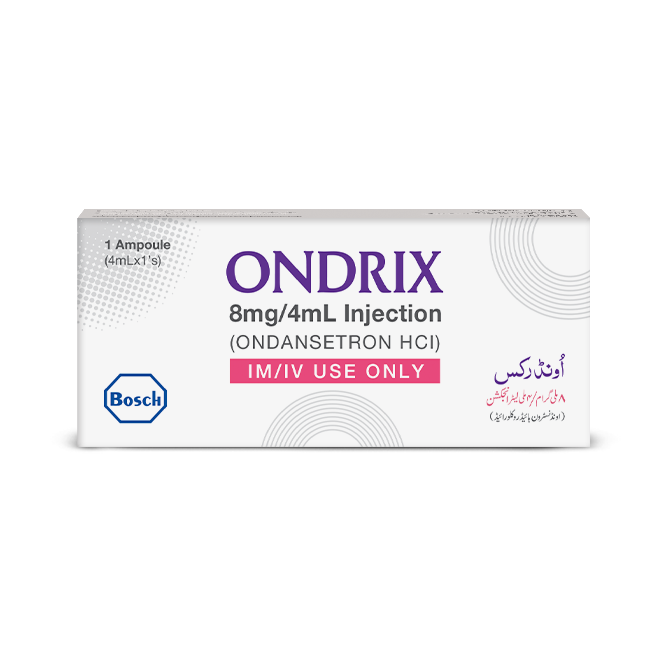
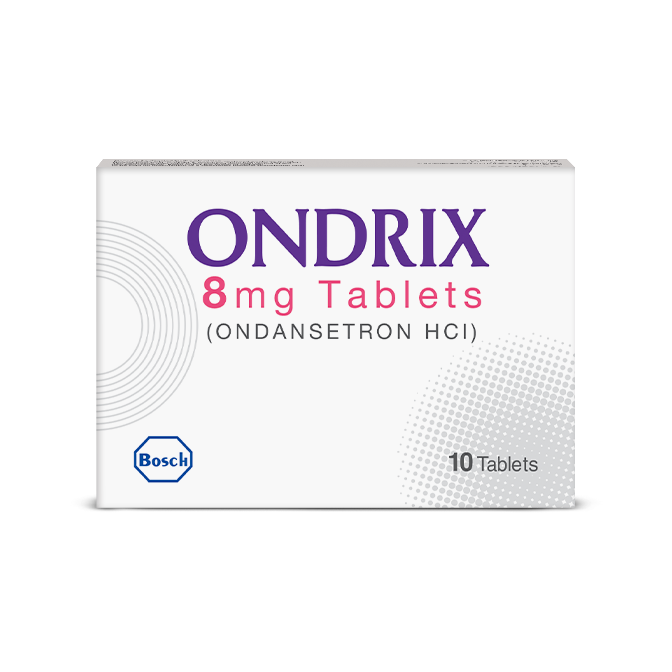
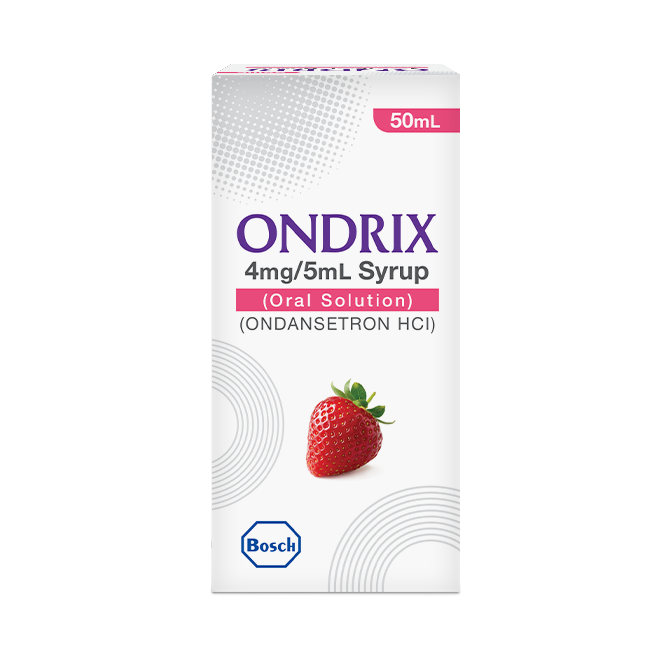

Scan QR code to open on your mobile device.
Available as
- INJECTION
- ONDRIX 8MG/4ML INJECTION
- TABLET
- ONDRIX 8MG TABLET
- Syrup
- ONDRIX 4mg/5mL Syrup (Oral Solution)
PRESCRIBING INFORMATION
QUALITATIVE AND QUANTITATIVE COMPOSITION
Ondrix 4mg/5mL Syrup (Oral Solution)
Each 5mL contains:
Ondansetron Hydrochloride USP
equivalent to Ondansetron……4mg
(Product Specs.: USP)
Ondrix 8mg Tablets
Each film coated tablet contains:
Ondansetron Hydrochloride Dihydrate Eq. to Ondansetron USP …. 8mg
(Product Specs.: USP)
“Product contains Lactose”
Ondrix 8mg/4mL Injection
Each 4ml contains:
Ondansetron Hydrochloride Dihydrate Eq. to Ondansetron USP …. 8mg
(Product Specs.: USP)
Therapeutic Indications
Tablets
Ondrix is indicated for the prevention of nausea and vomiting associated with:
• Highly emetogenic cancer chemotherapy, including cisplatin greater than or equal to 50mg/m².
• Initial and repeat courses of moderately emetogenic cancer chemotherapy.
• Radiotherapy in patients receiving either total body irradiation, single
high-dose fraction to the abdomen, or daily fractions to the abdomen.
• Indicated for the prevention of postoperative nausea and/or vomiting.
Injection
Adults: For the management of nausea and vomiting induced by cytotoxic
chemotherapy radiotherapy and for the prevention and treatment of
post-operative nausea and vomiting (PONV).
Paediatric Population:
Indicated for the management of chemotherapy-induced nausea and vomiting
(CINV) in children aged ≥ 6 months, and for the prevention and treatment of
PONV in children aged ≥1 month.
Posology and Method of Administration
Tablets:
Adult Recommended Dosage Regimen for Prevention of Nausea and Vomiting.
| Indication | Dosage Regimen |
| Highly emetogenic cancer chemotherapy | A single 24mg dose administered 30 minutes before the start of single -day highly emetogenic chemotherapy, including cisplatin greater than or equal to 50mg/m2. |
| Moderately emetogenic cancer chemotherapy | 8mg administered 30 minutes before the start of chemotherapy, with a subsequent 8mg dose 8 hours after the first dose. Then administer 8mg twice a day (every 12 hours) for 1 to 2 days after completion of chemotherapy. |
Radiotherapy | For total body irradiation: 8mg administered 1 to 2 hours before each fraction of radiotherapy each day. |
| Postoperative | 16mg administered 1 hour before induction of anesthesia. |
Pediatric Recommended Dosage Regimen for Prevention of Nausea and
Vomiting
| Indication | Dosage Regimen |
Moderately Emetogenic Cancer Chemotherapy | 12 to 17 years of age: 8mg administered 30 minutes before the start of chemotherapy, with a subsequent 8mg dose 8 hours after the first dose. Then administer 8mg twice a day (every 12 hours) for 1 to 2 days after completion of chemotherapy. 4 to 11 years of age: 4mg administered 30 minutes before the start of chemotherapy, with a subsequent 4mg dose 4 and 8 hours after the first dose.Then administer 4mg three times a day for 1 to 2 days after completion of chemotherapy. |
Injection:
Chemotherapy and Radiotherapy Induced nausea and vomiting in adults:
The route of administration and dose of ondansetron should be flexible in the
range of 8 – 32mg a day.
For most patients receiving emetogenic chemotherapy or radiotherapy,
ondansetron 8mg should be administered as a slow intravenous injection (in not
less than 30 seconds) or intramuscular injection, immediately before treatment,
followed by 8mg orally twelve hourly.
To protect against delayed or prolonged emesis after the first 24 hours, oral or
rectal treatment with ondansetron should be continued for up to 5 days after a
course of treatment.
For patients receiving highly emetogenic chemotherapy, e.g. high- dose cisplatin,
ondansetron can be given either by oral, rectal, intravenous or intramuscular
administration. Ondansetron has been shown to be equally effective in the
following dose schedules over the first 24 hours of chemotherapy:
• A single dose of 8mg by slow intravenous injection (in not less than 30
seconds) or intramuscular injection immediately before chemotherapy.
• A dose of 8mg by slow intravenous injection (in not less than 30 seconds) or
intramuscular injection immediately before chemotherapy, followed by two further intravenous injection (in not less than 30 seconds) or intramuscular doses of 8mg four hours apart, or by a constant infusion of 1mg/hour for up to 24 hours.
• A maximum initial intravenous dose of 16mg diluted in 50 – 100ml of saline or
other compatible infusion fluid and infused over not less than 15 minutes
immediately before chemotherapy. The initial dose of ondansetron may be
followed by two additional 8mg intravenous doses (in not less than 30
seconds) or intramuscular doses four hours apart. A single dose greater than
16mg must not be given due to dose dependent increase of QT – prolongation
risk.
The efficacy of ondansetron in highly emetogenic chemotherapy may be
enhanced by the addition of a single intravenous dose of dexamethasone
sodium phosphate, 20mg administered prior to chemotherapy. To protect against
delayed or prolonged emesis after the first 24 hours, oral or rectal treatment with
ondansetron should be continued for up to 5 days after a course of treatment.
Chemotherapy and radiotherapy induced nausea and vomiting in
Paediatric Population:
CINV in children and adolescents (aged 6 months to 17 years):
The dose for CINV can be calculated based on body surface area (BSA) or
weight. Ondansetron was given by IV infusion diluted in 25 to 50ml of saline or
other compatible infusion fluid and infused over not less than 15 minutes.
Ondansetron injection should be diluted in 5% dextrose or 0.9% sodium chloride
or other compatible infusion fluid and infused intravenously over not less than 15
minutes.
Dosing by Body Surface Area (BSA)
Ondansetron should be administered immediately before chemotherapy as a single intravenous dose of 5mg/m2. The single intravenous dose must not exceed 8mg. Oral dosing can commence 12 hours later and may be continued for up to 5 days. The total dose over 24 hours (given as divided doses) must not exceed adult dose of 32mg.
BSA-based dosing for CINV (aged ≥ 6 months to 17 years)
BSA | Day 1(a,b) | Days 2-6(b) |
| < 0.6 m2 | 5mg/m2 IV plus 2mg syrup after 12 hours | 2mg syrup every 12 hours |
| > 0.6 m2 to ≤ 1.2 m2 | 5mg/m2 IV plus 4mg syrup or tablet after 12 hours | 4mg syrup or tablet every 12 hours |
| > 1.2 m2 | 5mg/m2 or 8mg IV plus 8mg syrup or tablet after 12 hours | 8mg syrup or tablet every 12 hours |
a.The intravenous dose must not exceed 8mg.
b.The total dose over 24 hours (given as divided doses) must not exceed adult dose of 32mg.
Dosing by bodyweight
Ondansetron should be administered immediately before chemotherapy as a single intravenous dose of 0.15mg/kg. The single intravenous dose must not exceed 8mg.
Two further intravenous doses may be given in 4-hourly intervals. Oral dosing can commence 12 hours later and may be continued for up to 5 days. The total dose over 24 hours (given as divided doses) must not exceed adult dose of 32mg.
Weight-based dosing for CINV (aged 6 months to 17 years)
| Weight | Day1⁽ᵃ,ᵇ⁾ | Day 2-6⁽ᵇ⁾ |
| <10kg | Up to 3 doses of 0.15mg/kg IV every 4 hours | 2mg syrup every 12 hours |
| >10kg | Up to 3 doses of 0.15mg/kg IV every 4 hours | 4mg syrup or tablet every 12 hours |
a. The intravenous dose must not exceed 8mg.
b. The total daily dose over 24 hours (given as divided doses) must not exceed adult dose of 32mg.
Post-operative nausea and vomiting (PONV)
Adults:
• For the prevention of PONV: Ondansetron can be administered orally or by
intravenous or intramuscular injection. It may be administered as a single dose
of 4mg given by intramuscular or slow intravenous injection at induction of
anaesthesia.
• For treatment of established PONV: A single dose of 4mg given by
intramuscular or slow intravenous injection is recommended.
Paediatric population (aged 1 month to 17 years):
• For prevention of PONV in paediatric patients having surgery performed under
general anesthesia, a single dose of ondansetron may be administered by
slow intravenous injection (not less than 30 seconds) at a dose of 0.1mg/kg up
to a maximum of 4mg either prior to, at or after induction of anaesthesia.
• For the treatment of PONV after surgery in paediatric patients having surgery
performed under general anaesthesia, a single dose of ondansetron may be
administered by slow intravenous injection (not less than 30 seconds) at a
dose of 0.1mg/kg up to a maximum of 4mg.
Elderly
There is limited experience in the use of ondansetron in the prevention and
treatment of post-operative nausea and vomiting (PONV) in the elderly, however
ondansetron is well tolerated in patients over 65 years receiving chemotherapy.
CINV; When calculating the dose on an mg/kg basis and administering three
doses at 4-hour intervals, the total daily dose will be higher than if one single
dose of 5mg/m2
followed by an oral dose is given.
Special populations
Patients with Renal impairment; No alteration of daily dosage or frequency of
dosing, or route of administration are required.
Patients with Hepatic impairment; Clearance of ondansetron is significantly
reduced and serum half-life significantly prolonged in patients with moderate or
severe impairment of hepatic function. In such patients a total daily dose of 8mg
should not be exceeded and therefore parenteral or oral administration is
recommended.
Patients with poor Sparteine/Debrisoquine Metabolism; No alteration of daily
dosage or frequency of dosing is required.
Elderly
In patients 65 to 74 years of age, the dose schedule for adults can be followed.
All intravenous doses should be diluted in 50 – 100ml of saline or other
compatible infusion fluid and infused over 15 minutes.
In patients 75 years of age or older, the initial intravenous dose of ondansetron
should not exceed 8mg. All intravenous doses should be diluted in 50 – 100ml of
saline or other compatible infusion fluid and infused over 15 minutes. The initial
dose of 8mg may be followed by two further intravenous doses of 8mg, infused
over 15 minutes and given no less than four hours apart.
Pediatric population: Patients receiving ondansetron with hepatotoxic
chemotherapeutic agents should be monitored closely for impaired hepatic
function.
Contraindications
• Hypersensitivity to ondansetron.
• Concomitant use with apomorphine is contraindicated.
Special warnings and precautions for use
• Hypersensitivity reactions have been reported in patients who have exhibited
hypersensitivity to other selective 5-HT3 receptor antagonists. Respiratory
events should be treated symptomatically and clinicians should pay particular
attention to them as precursors of hypersensitivity reactions.
• Ondansetron prolongs the QT interval in a dose-dependent manner. Avoid
ondansetron in patients with congenital long QT syndrome. Ondansetron
should be administered with caution to patients who have or may develop
prolongation of QTc, including patients with electrolyte abnormalities,
congestive heart failure, bradyarrhythmias or patients taking other medicinal
products that lead to QT prolongation or electrolyte abnormalities.
• Cases of myocardial ischemia have been reported in patients treated with
ondansetron. In some patients, especially in the case of intravenous
administration, symptoms appeared immediately. Patients should be alerted to
the signs and symptoms of myocardial ischemia.
• Hypokalaemia and hypomagnesaemia should be corrected prior to
ondansetron administration.
• Concomitant treatment with ondansetron and other serotonergic drugs is
clinically warranted, appropriate observation of the patient is advised.
• Ondansetron is known to increase large bowel transit time, patients with signs
of subacute intestinal obstruction should be monitored following
administration.
• In patients with adenotonsillar surgery prevention of nausea and vomiting with
ondansetron may mask occult bleeding. Therefore, such patients should be
followed carefully after ondansetron.
Interaction with other medicinal products and other forms of interaction
Cytochrome P-450 enzymes: Ondansetron is metabolised by multiple hepatic
cytochrome P-450 enzymes; CYP3A4, CYP2D6 and CYP1A2. It should result in
little or no significant change in overall ondansetron clearance or dose
requirement.
Serotonergic Drugs (e.g. SSRIs and SNRIs): There have been reports describing
patients with serotonin syndrome (including altered mental status, autonomic
instability and neuromuscular abnormalities) following the concomitant use of
ondansetron and other serotonergic drugs (including SSRIs and SNRIs).
Apomorphine: Concomitant use with apomorphine is contraindicated.
Phenytoin, Carbamazepine and Rifampicin: In patients treated with potent
inducers of CYP3A4 (i.e. phenytoin, carbamazepine, and rifampicin), the oral
clearance of ondansetron is increased and ondansetron blood concentrations is
decreased.
Tramadol: Ondansetron may reduce the analgesic effect of tramadol.
QT prolonging drugs: Caution should be exercised when ondansetron is
coadministered with drugs that prolong the QT interval and/or cause electrolyte
abnormalities.
Cardiotoxic Drugs, Antibiotics, Antifungals, Antiarrhythmics: Concomitant use of
ondansetron with cardiotoxic drugs (e.g. anthracyclines (such as doxorubicin,
daunorubicin) or trastuzumab), antibiotics (such as erythromycin), antifungals
(such as ketoconazole), antiarrhythmics (such as amiodarone) and beta blockers
(such as atenolol or timolol) may increase the risk of arrhythmias.
Fertility, Pregnancy and Lactation
Pregnancy: Ondansetron is suspected to cause orofacial malformations when
administered during the first trimester of pregnancy. It should not be used during
the first trimester of pregnancy.
Lactation: It is recommended that mothers receiving ondansetron should not
breast-feed their babies.
Fertility: No information available on the effects of ondansetron on human fertility.
Effects on Ability to Drive and Use Machines
Ondansetron has no or negligible influence on the ability to drive and use
machines. In psychomotor testing ondansetron does not impair performance nor
cause sedation. No detrimental effects on such activities are predicted from the
pharmacology of ondansetron.
Undesirable Effects
Immune system disorders:
Rare: Immediate hypersensitivity reactions sometimes severe, including
anaphylaxis.
Nervous system disorders:
Very common: Headache.
Uncommon: Seizures, movement disorders (including extrapyramidal reactions
(such as oculogyric crisis, dystonic reactions and dyskinesia).
Rare: Dizziness predominantly during rapid IV administration.
Eye disorders:
Rare: Transient visual disturbances (e.g. blurred vision) predominantly during IV
administration.
Very rare: Transient blindness predominantly during IV administration.
Cardiac disorders:
Uncommon: Arrhythmias, chest pain with or without ST segment depression,
bradycardia.
Rare: QTc prolongation (including Torsade de Pointes)
Not known: Myocardial ischemia.
Vascular disorders:
Common: Sensation of warmth or flushing.
Uncommon: Hypotension.
Respiratory, thoracic and mediastinal disorders:
Uncommon: Hiccups.
Gastrointestinal disorders:
Common: Constipation. Ondansetron is known to increase the large bowel
transit time and may cause constipation in some patients.
Hepatobiliary disorders:
Uncommon: Asymptomatic increases in liver function tests.
General disorders and administration site conditions
Common: Local IV injection site reactions.
Overdose
Ondansetron prolongs the QT interval in a dose-dependent fashion. ECG
monitoring is recommended in cases of overdose.
Pediatric cases consistent with serotonin syndrome have been reported after
inadvertent oral overdoses of ondansetron (exceeded estimated ingestion of
4mg/kg) in infants and children aged 12 months to 2 years.
There is no specific antidote for ondansetron, therefore in all cases of suspected
overdose, symptomatic and supportive therapy should be given as appropriate.
PHARMACOLOGICAL PROPERTIES
Pharmacodynamic properties
Pharmacotherapeutic group: Serotonin (5-HT3) antagonists
ATC Code: A04AA01
Mechanism of action: Ondansetron is a potent, highly selective 5-HT3
receptor-antagonist. Its precise mode of action in the control of nausea and
vomiting is not known.
Chemotherapeutic agents and radiotherapy may cause release of 5-HT in the
small intestine initiating a vomiting reflex by activating vagal afferents via 5-HT3
receptors. Ondansetron blocks the initiation of this reflex. Activation of vagal
afferents may also cause a release of 5-HT in the area postrema, located on the
floor of the fourth ventricle, and this may also promote emesis through a central
mechanism. Thus, the effect of ondansetron in the management of the nausea
and vomiting induced by cytotoxic chemotherapy and radiotherapy is probably
due to antagonism of 5-HT3 receptors on neurons located both in the peripheral
and central nervous system.
The mechanisms of action in post-operative nausea and vomiting are not known
but there may be common pathways with cytotoxic induced nausea and
vomiting. Ondansetron does not alter plasma prolactin concentrations.
Pharmacokinetic properties
Absorption: Following oral administration, ondansetron is passively and
completely absorbed from the gastrointestinal tract and undergoes first pass
metabolism. Peak plasma concentrations of about 30mg/mL are attained
approximately 1.5 hours after an 8mg dose. For doses above 8mg the increase
in ondansetron systemic exposure with dose is greater than proportional; this
may reflect some reduction in first pass metabolism at higher oral doses. The
disposition of ondansetron following oral, intramuscular (IM) and intravenous (IV)
dosing is similar with a terminal half-life of about 3 hours and steady state volume
of distribution of about 140L.
A 4mg intravenous infusion of ondansetron given over 5 minutes results in peak
plasma concentrations of about 65mg/mL. Following intramuscular
administration of ondansetron, peak plasma concentrations of about 25mg/mL
are attained within 10 minutes of injection.
Distribution: Ondansetron is not highly protein bound (70-76%).
Biotransformation and Elimination: Ondansetron is cleared from the systemic
circulation predominantly by hepatic metabolism through multiple enzymatic
pathways. Less than 5% of the absorbed dose is excreted unchanged in the
urine. The pharmacokinetic properties of ondansetron are unchanged on repeat
dosing.
Special Patient Populations
Gender: Females have a greater rate and extent of absorption following an oral
dose and reduced systemic clearance and volume of distribution (adjusted for
weight).
Renal impairment: In patients with renal impairment (creatinine clearance
15-60mL/min), both systemic clearance and volume of distribution are reduced
following IV administration of ondansetron, resulting in a slight, but clinically
insignificant, increase in elimination half-life (5.4h).
Hepatic impairment: Following oral, intravenous or intramuscular dosing in
severe hepatic impairment, ondansetron’s systemic clearance is markedly
reduced with prolonged elimination half-lives (15-32 hours) and an oral
bioavailability approaching 100% due to reduced pre-systemic metabolism.
PHARMACEUTICAL PROPERTIES
Incompatibilities
None
Shelf life: 2 years.
Special precautions for storage & Instructions:
Tablets: Protect from light, heat & moisture, store below 30°C.
Injection: Protect from heat, light & moisture, store between 2°C to 30°C.
Do not use if injection is leaking, solution is cloudy or contains un-dissolved
particles.
Keep out of the reach of children.
To be sold on the prescription of a registered medical practitioner only.
Nature and contents of container
Ondrix 8mg Tablets: Cold form & Cold seal Alu Alu blister pack of 10 Tablets.
Ondrix 8mg/4mL Injection: Pack of 1 Ampoule.
REGISTRATION HOLDER / MARKETING AUTHORIZATION HOLDER
Head office:
Bosch Pharmaceuticals (Pvt.) Ltd.,
8, Modern Society, Tipu Sultan Road, Karachi, Pakistan.
Manufacturer:
Bosch Pharmaceuticals (Pvt.) Ltd.,
221-223, Sector 23, Korangi Industrial area, Karachi, Pakistan.
REGISTRATION / MARKETING AUTHORIZATION NUMBER
Ondrix 8mg Tablets: 130729
Ondrix 8mg/4mL Injection: 130728
DATE FROM WHICH MARKETING IS AUTHORIZED/RENEWAL OF THE
AUTHORIZATION
22-10-2025
DATE OF REVISION OF THE TEXT
07-01-2026
PHARMACEUTICAL FORM
Oral solution
CLINICAL PARTICULARS
Therapeutic indications
Ondrix is indicated for the prevention of nausea and vomiting associated with:
- Highly emetogenic cancer chemotherapy, including cisplatin greater than or equal to 50mg/m².
- Initial and repeat courses of moderately emetogenic cancer chemotherapy.
- Radiotherapy in patients receiving either total body irradiation, single high–dose fraction to the abdomen, or daily fractions to the abdomen.
- Indicated for the prevention of postoperative nausea and/or vomiting.
Posology and Method of Administration
Adult Recommended Dosage Regimen for Prevention of Nausea and Vomiting
| Indication | Dosage Regimen |
| Highly emetogenic cancer chemotherapy | A single 24mg dose administered 30 minutes before the start of single–day highly emetogenic chemotherapy, including cisplatin greater than or equal to 50mg/m2. |
| Moderately emetogenic cancer chemotherapy | 8 mg administered 30 minutes before the start of chemotherapy, with a subsequent 8 mg dose 8 hours after the first dose. Then administer 8 mg twice a day (every 12 hours) for 1 to 2 days after completion of chemotherapy. |
| Radiotherapy | For total body irradiation: 8mg administered 1 to 2 hours before each fraction of radiotherapy each day For single high–dose fraction radiotherapy to the abdomen: 8mg administered 1 to 2 hours before radiotherapy, with subsequent 8 mg doses every 8 hours after the first dose for 1 to 2 days after completion of radiotherapy. For daily fractionated radiotherapy to the abdomen: 8mg administered 1 to 2 hours before radiotherapy, with subsequent 8mg doses every 8 hours after the first dose for each day radiotherapy is given. |
| Postoperative | 16mg administered 1 hour before induction of anesthesia. |
Pediatric Recommended Dosage Regimen for Prevention of Nausea and
Vomiting
| Indication | Dosage Regimen |
| Moderately Emetogenic Cancer Chemotherapy | 12 to 17 years of age: 8mg administered 30 minutes before the start of chemotherapy, with a subsequent 8 mg dose 8 hours after the first dose. Then administer 8mg twice a day (every 12 hours) for 1 to 2 days after completion of chemotherapy. 4 to 11 years of age: 4mg administered 30 minutes before the start of chemotherapy, with a subsequent 4mg dose 4 and 8 hours after the first dose. Then administer 4mg three times a day for 1 to 2 days after completion of chemotherapy. |
Special populations
Patients with Renal impairment; No alteration of daily dosage or frequency of dosing, or route of administration are required.
Patients with Hepatic impairment: Clearance of ondansetron is significantly reduced and serum half–life significantly prolonged in patients with moderate or severe impairment of hepatic function. In such patients a total daily dose of 8mg should not be exceeded and therefore parenteral or oral administration is recommended.
Patients with poor Sparteine/Debrisoquine Metabolism: No alteration of daily dosage or frequency of dosing is required.
Elderly: There is limited experience in the use of ondansetron in the prevention and treatment of post–opera- tive nausea and vomiting (PONV) in the elderly, however ondansetron is well tolerated in patients over 65 years receiving chemotherapy.
Paediatric population: Patients receiving ondansetron with hepatotoxic chemotherapeutic agents should be monitored closely for impaired hepatic function.
Contraindications
- Hypersensitivity to ondansetron.
- Concomitant use with apomorphine is contraindicated.
Special warnings and precautions for use
- Hypersensitivity reactions have been reported in patients who have exhibited hypersensitivity to other selective 5–HT3 receptor antagonists. Respiratory events should be treated symptomatically and clinicians should pay particular attention to them as precursors of hypersensitivity reactions.
- Avoid ondansetron in patients with congenital long QT syndrome. Ondansetron should be administered with caution to patients who have or may develop prolongation of QTc, including patients with electrolyte abnormalities, congestive heart failure, bradyarrhythmias or patients taking other medicinal products that lead to QT prolongation or electrolyte abnormalities.
- Cases of myocardial ischemia have been reported in patients treated with ondansetron. In some patients, especially in the case of intravenous administration, symptoms appeared immediately. Patients should be alerted to the signs and symptoms of myocardial ischemia.
- Hypokalaemia and hypomagnesaemia should be corrected prior to ondansetron administration.
- If concomitant treatment with ondansetron and other serotonergic drugs is clinically warranted, appropriate observation of the patient is advised.
- Ondansetron is known to increase large bowel transit time, patients with signs of subacute intestinal obstruction should be monitored following administration.
- In patients with adenotonsillar surgery prevention of nausea and vomiting with ondansetron may mask occult bleeding. Therefore, such patients should be followed carefully after ondansetron.
Interaction with other medicinal products and other forms of interaction
Cytochrome P–450 enzymes: Ondansetron is metabolised by multiple hepatic cytochrome P–450 enzymes; CYP3A4, CYP2D6,CYP1A2 and is normally compensated by other enzymes and should result in little or no significant change in overall ondansetron clearance or dose requirement.
Serotonergic Drugs (e.g. SSRIs and SNRIs): There have been reports describing patients with serotonin syndrome (including altered mental status, autonomic instability and neuromuscular abnormalities) following the concomitant use of ondansetron and other serotonergic drugs (including SSRIS and SNRIs).
Apomorphine: Profound hypotension and loss of consciousness when ondansetron was administered with apomorphine hydrochloride, concomitant use with apomorphine is contraindicated.
Phenytoin, Carbamazepine and Rifampicin: In patients treated with potent inducers of CYP3A4 (i.e. phenytoin, carbamazepine, and rifampicin), the oral clearance of ondansetron is increased and ondansetron blood concentrations is decreased.
Tramadol: Ondansetron may reduce the analgesic effect of tramadol.
QT prolonging drugs: Caution should be exercised when ondansetron is coadministered with drugs that prolong the QT interval and/or cause electrolyte abnormalities. Use of ondansetron with QT prolonging drugs may result in additional QT prolongation.
Cardiotoxic Drugs, Antibiotics, Antifungals, Antiarrhythmics: Concomitant use of ondansetron with cardiotoxic drugs (e.g. anthracyclines (such as doxorubicin, daunorubicin or trastuzumab), antibiotics (such as erythromycin), antifungals (such as ketoconazole), antiarrhythmics (such as amiodarone) and beta blockers (such as atenolol or timolol) may increase the risk of arrhythmias.
Pregnancy, Lactation and Fertility
Pregnancy: Ondansetron is suspected to cause orofacial malformations when administered during the first trimester of pregnancy. It should not be used during the first trimester of pregnancy.
Lactation: It is recommended that mothers receiving ondansetron should not breast–feed their babies.
Fertility: There is no information on the effects of ondansetron on human fertility.
Effects on ability to drive and use machines Ondansetron has no or negligible influence on the ability to drive and use machines. In psychomotor testing ondansetron does not impair performance nor cause sedation. No detrimental effects on such activities are predicted from the pharmacology of ondansetron.
Undesirable Effects
Immune system disorders Rare: Immediate hypersensitivity reactions sometimes severe, including anaphylaxis.
Nervous system disorders; Very common: Headache, Uncommon: Seizures, movement disorders (including extrapyramidal reactions (such as oculogyric crisis, dystonic reactions and dyskinesia).
Cardiac disorders: Uncommon: Arrhythmias, chest pain with or without ST segment depression, bradycardia, Rare: QTc prolongation (including Torsade de Pointes), Not known: Myocardial ischemia.
Vascular disorders: Common: Sensation of warmth or
flushing.
Uncommon: Hypotension.
Respiratory, thoracic and mediastinal disorders:
Uncommon: Hiccups.
Gastrointestinal disorders; Common: Constipation. Ondansetron is known to increase the large bowel transit time and may cause constipation in some patients.
Hepatobiliary disorders: increases in liver function tests.
Overdose
Ondansetron prolongs the QT interval in a dose–dependent fashion. ECG monitoring is recommended in cases of overdose.
Pediatric cases consistent with serotonin syndrome have been reported after inadvertent oral overdoses of ondansetron (exceeded estimated ingestion of 4mg/kg) in infants and children aged 12 months to 2 years. There is no specific antidote for ondansetron, therefore in all cases of suspected overdose, symptomatic and supportive therapy should be given as appropriate.
PHARMACOLOGICAL PROPERTIES Pharmacodynamic properties
Pharmacotherapeutic group: Serotonin (5–HT3) antagonists,
ATC Code: A04AA01
Mechanism of action: Ondansetron is potent, highly selective 5–HT3 receptor–antagonist. Its precise mode of action in the control of nausea and vomiting is not known. Chemotherapeutic agents and radiotherapy may cause release of 5–HT in the small intestine initiating a vomiting reflex by activating vagal afferents via 5–HT3 receptors.
Ondansetron blocks the initiation of this reflex. Activation of vagal afferents may also cause a release of 5–HT in the area postrema, located on the floor of the fourth ventricle, and this may also promote emesis through a central mechanism. Thus, the effect of ondansetron in the management of the nausea and vomiting induced by cytotoxic chemotherapy and radiotherapy is probably due to antagonism of 5–HT3 receptors on neurons located both in the peripheral and central nervous system.
The mechanisms of action in post–operative nausea and vomiting are not known but there may be common pathways with cytotoxic induced nausea and vomiting. Ondansetron does not alter plasma prolactin concentrations.
Pharmacokinetic properties
Absorption: Following oral administration, ondansetron is passively and completely absorbed from the gastrointestinal tract and undergoes first pass metabolism. Peak plasma concentrations of about 30mg/mL are attained approximate- ly 1.5 hours after an 8mg dose. For doses above 8mg the increase in ondansetron systemic exposure with dose is greater than proportional; this may reflect some reduction in first pass metabolism at higher oral doses. The disposition of ondansetron following oral, intramuscular (IM) and intravenous (IV) dosing is similar with a terminal half–life of about 3 hours and steady state volume of distribution of about 140L.
Distribution: Ondansetron is not highly protein bound (70-76%).
Biotransformation and Elimination: Ondansetron is cleared from the systemic circulation predominantly by hepatic metabolism through multiple enzymatic pathways. Less than 5% of the absorbed dose is excreted unchanged in the urine.
Special Patient Populations
Gender: Females have a greater rate and extent of absorption following an oral dose and reduced systemic clearance and volume of distribution (adjusted for weight).
Hepatic impairment: Following oral, intravenous or intramuscular dosing in patients with severe hepatic impairment, ondansetron’s systemic clearance is markedly reduced with prolonged elimination half–lives (15-32 hours) and an oral bioavailability approaching 100% due to reduced pre–systemic metabolism.
PHARMACEUTICAL PROPERTIES
Incompatibilities
None
Shelf life:
As provided on pack
Special precautions for storage
Protect from light, heat & moisture, store below 30°C.
Do not take if seal is broken.
Close the cap properly after use.
Keep out of the reach of children.
To be sold on the prescription of a registered medical practitioner only.
Nature and contents of container
50mL in amber glass bottle.
REGISTRATION HOLDER / MARKETING AUTHORIZATION HOLDER
Bosch Pharmaceuticals (Pvt.) Ltd.
221-223, Sector-23, Korangi Industrial Area, Karachi-Pakistan.
Manufacturer:
Wimits Pharmaceuticals (Pvt.) Ltd.
Plot No. 129 Sundar Industrial Estate, Lahore, Pakistan.
REGISTRATION NUMBER / MARKETING AUTHORIZATION
128071
DATE FROM WHICH MARKETING IS AUTHORIZED/RE- NEWAL OF THE AUTHORIZATION
04-07-2025
DATE OF REVISION OF THE TEXT
25-02-2026